Sparklet vs Qt for MCUs: Three Decisive Differences
Language overhead, licensing economics, and safety compliance — the three dimensions that determine which framework is right for MCU-class embedded development.
C++ vs Pure C: Overhead That Matters at 16–256 KB RAM
Qt for MCUs is built on C++. On MPU-class hardware with hundreds of megabytes of RAM, C++ overhead is negligible. On MCU-class hardware at 16–256 KB RAM, the situation is fundamentally different.
C++ introduces overhead that compounds on resource-constrained MCUs:
- Virtual function tables (vtables): Every polymorphic C++ class requires a vtable pointer per object instance. In a widget tree with hundreds of widget instances, this overhead is constant and unavoidable.
- C++ runtime library: Even with exceptions and RTTI disabled — the standard configuration for embedded C++ — the runtime library adds code size and complexity to every build.
- STL containers: Dynamic allocation patterns from std::vector and similar on MCUs are a source of fragmentation and undefined runtime behaviour. Embedded C++ must explicitly avoid or replace these.
- Constructor/destructor order: Global constructors execute before main(), complicating startup behaviour on bare-metal systems.
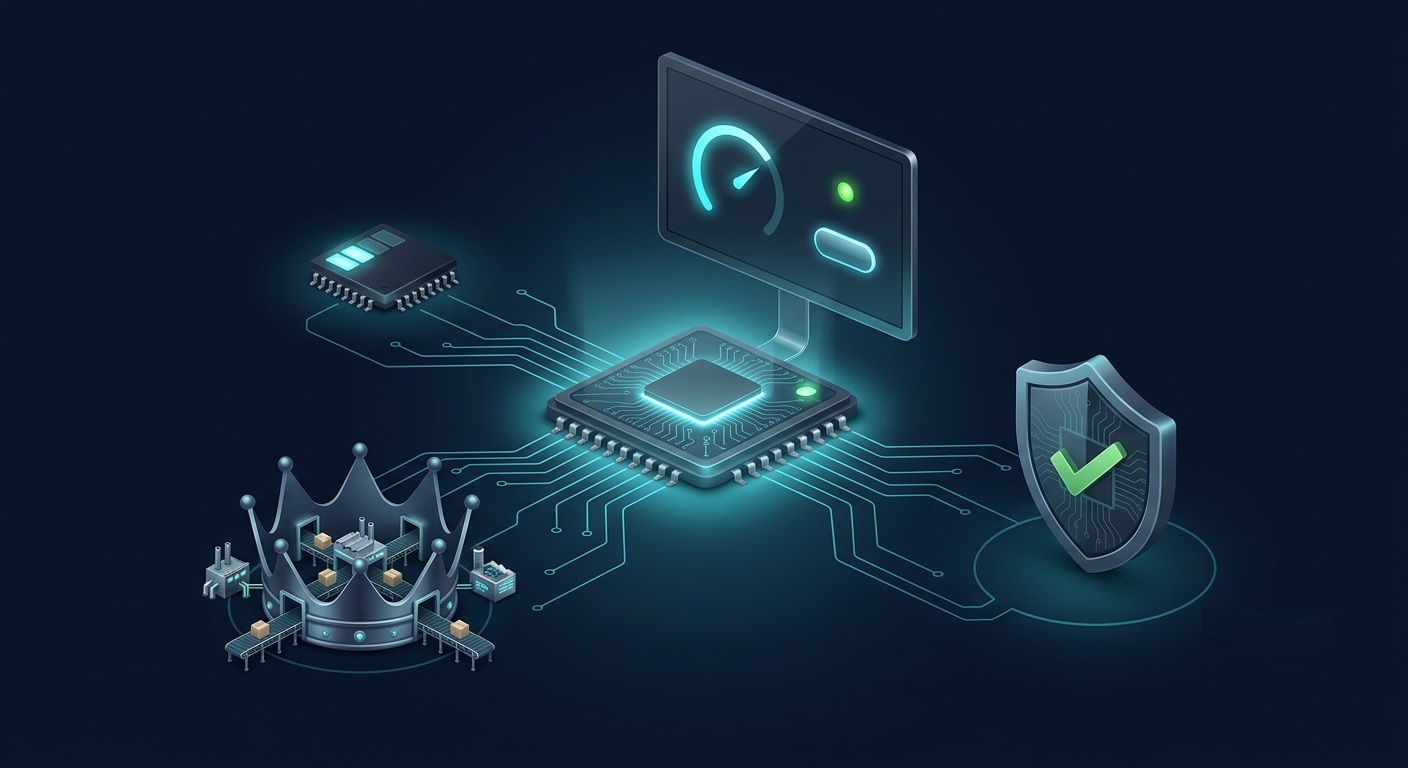
Sparklet's pure C codebase has zero C++ runtime overhead. RAM usage starts at 16 KB — no vtables, no runtime library tax, no STL. This is not a theoretical advantage; it is the difference between fitting a UI framework on a 64 KB MCU or not.
Per-Unit Royalty vs Royalty-Free: Scale Economics
Qt for MCUs charges a per-unit royalty — a fee for every device shipped. The royalty model means the Qt licensing cost grows proportionally with production volume:
- At 1,000 units: per-unit royalties are negligible on the BOM.
- At 50,000 units: they register as a significant cost line.
- At 500,000+ units — typical for automotive tier-1, consumer electronics, or industrial OEM — per-unit royalties represent a material recurring cost that compounds with every additional unit shipped.
Sparklet's royalty-free per-developer-seat model inverts this entirely. Licensing cost is determined by the number of engineers on the project — a one-time or annual fixed cost. A product shipping one million units pays the same licensing cost as one shipping one thousand.
Royalty-free licensing also eliminates unit-reporting obligations and per-unit audit risk — a practical benefit for procurement and finance teams managing embedded software agreements.
For any product with volume ambitions, Sparklet's structure is a cost advantage that compounds over the product lifetime.
MISRA C Compliance: The Safety Certification Gate
MISRA C is the mandatory coding standard for safety-critical embedded software across automotive, medical, and industrial sectors. It is a C standard — not a C++ standard. A C++ codebase cannot achieve MISRA C compliance. This is a language-level incompatibility, not a toolchain gap or documentation issue.
The consequence is categorical: Qt for MCUs cannot be used in applications requiring MISRA C compliance. This includes:
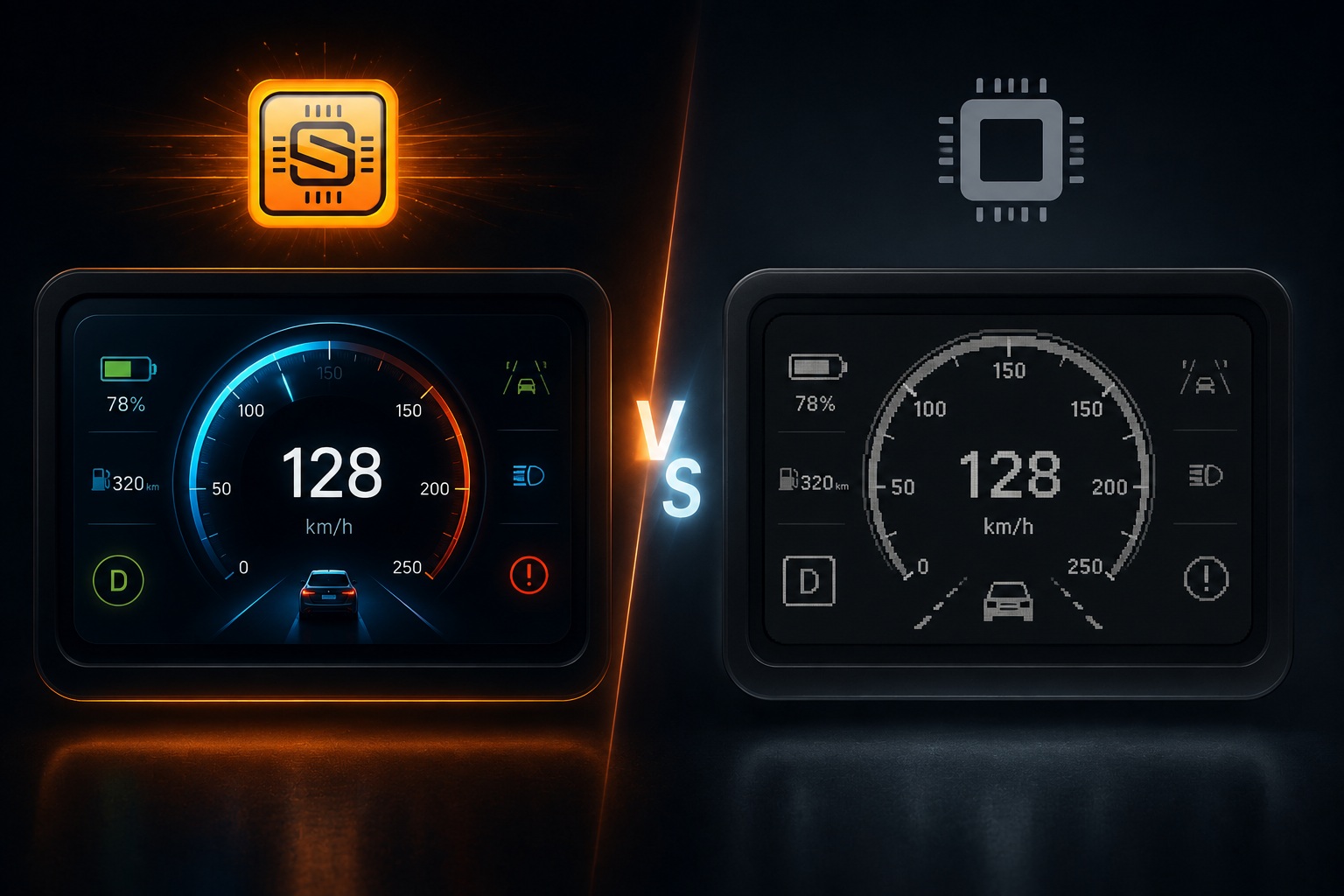
- Automotive HMI programmes targeting ISO 26262 ASIL ratings (digital instrument clusters, ADAS displays).
- Medical device GUI components classified under IEC 62304 software Class B or C.
- Industrial safety applications targeting IEC 61508 SIL 2 or SIL 3.
- Any programme where a customer specification mandates MISRA C source code.
Sparklet's entire codebase meets MISRA C standards. For every programme where MISRA C is a hard requirement, Sparklet is the viable framework and Qt for MCUs is not. See Safety-Critical Embedded HMI for detail on certification requirements.