Camera-Based Cluster UI with Sparklet on Renesas RH850
Overview
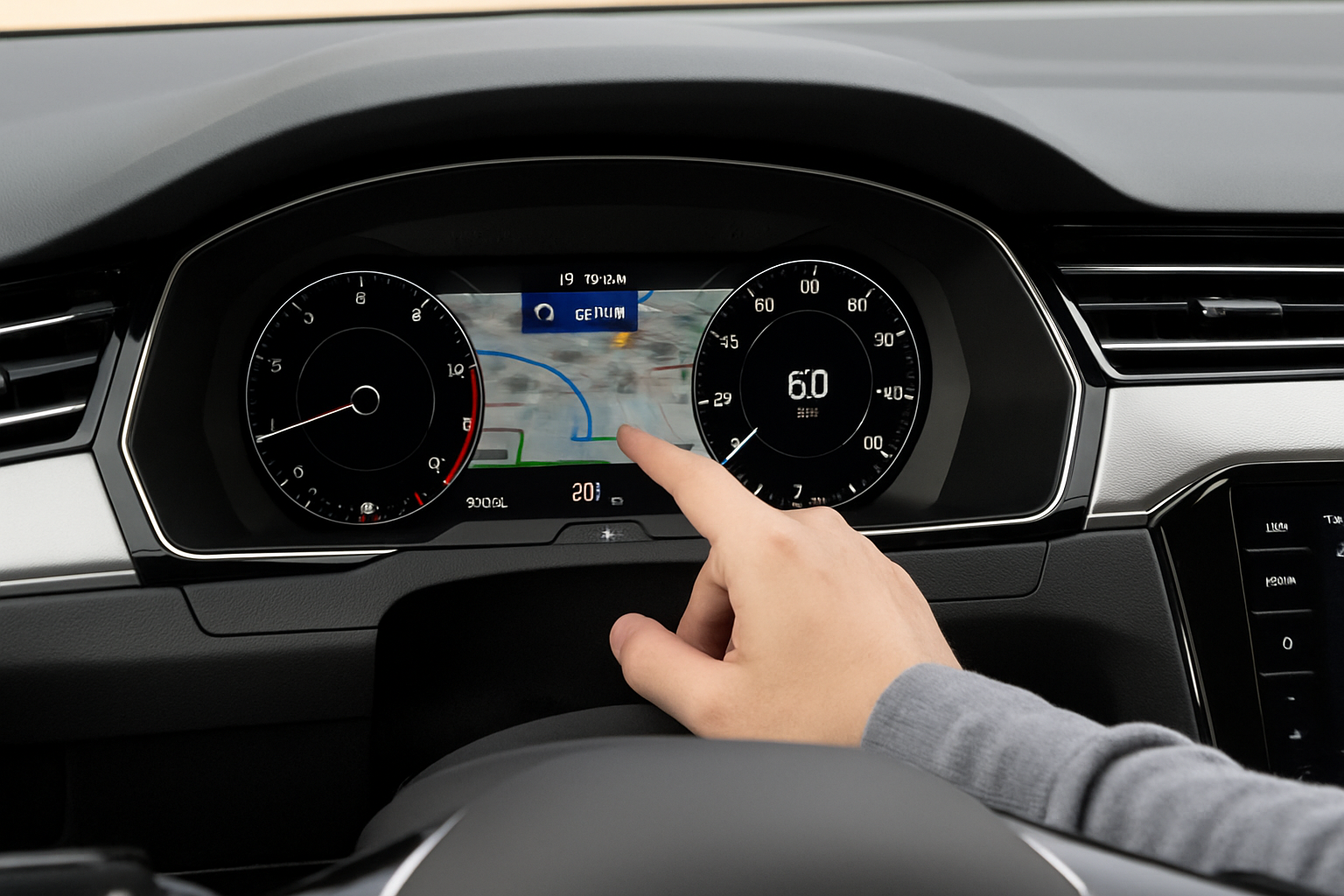
With the automotive industry embracing advanced driver assistance systems (ADAS), the integration of camera feeds into digital clusters has become a key requirement. A leading Tier-1 automotive supplier approached Embien Technologies to develop a hybrid instrument cluster with camera integration, targeting a high-performance RH850-based platform.
Challenge
The challenge was to deliver a seamless user experience with live video rendering alongside real-time cluster graphics, all within the strict resource constraints of a microcontroller environment.
The RH850 series MCU from Renesas offers powerful real-time performance and low-power operation but comes with limited graphics acceleration capabilities. The goal was to efficiently integrate live camera input - such as rear-view or surround-view feeds - into the cluster UI, while also maintaining the responsiveness of traditional gauge elements, warning indicators, and animations.
Key constraints included:
- Maintaining smooth camera video with minimal latency
- Overlaying UI graphics without visual artifacts
- Keeping CPU and memory usage within strict limits
- Ensuring predictable, real-time behavior suitable for production vehicles
Solution
To meet this requirement, Embien deployed Sparklet, its ultra-lightweight graphics engine specifically optimized for embedded platforms like RH850. Sparklet was adapted to work in parallel with the camera processing pipeline, ensuring that display buffers could be dynamically composed with both video frames and vector graphics. This allowed live camera feeds to be seamlessly overlaid with graphical elements such as parking guides, status icons, and notifications - enhancing driver awareness without performance degradation.
UI Design and BehaviorThe cluster interface was designed using Flint UI Designer, with a strong focus on clarity and driver usability.
The UI dynamically adapts based on vehicle state:
- Camera views are activated automatically during reverse or low-speed conditions.
- Overlay elements such as guidelines and alerts appear contextually.
- Transitions between normal driving mode and camera mode are smooth and unobtrusive.
This ensures that the camera feed enhances awareness without distracting from essential driving information.
Performance and ReliabilityExtensive testing was carried out on the target hardware to validate real-world performance. The system delivers:
- Stable, real-time camera rendering
- Consistent UI responsiveness under load
- Controlled CPU and memory usage suitable for long-duration operation
Fail-safe handling ensures that the cluster gracefully falls back to standard display modes if camera input becomes unavailable, supporting automotive reliability requirements.
Conclusion
By leveraging Sparklet on the RH850 platform, Embien empowered the Tier-1 supplier to deliver an innovative and cost-effective alternative to fully GPU-based instrument cluster systems. This approach enables high-end, camera-integrated functionality on resource-constrained hardware, making it ideally suited for mid-range vehicle platforms. The solution is currently being deployed across multiple compact and mid-segment 4-wheeler models in Asia, helping OEMs enhance safety, usability, and visual sophistication without increasing system complexity or cost.